

What are the communication protocols used in a box type substation?
Leave a message

Hey there! As a supplier of box type substations, I've been getting a lot of questions lately about the communication protocols used in these nifty pieces of equipment. So, I thought I'd take a moment to break it down for you and explain what's going on behind the scenes.
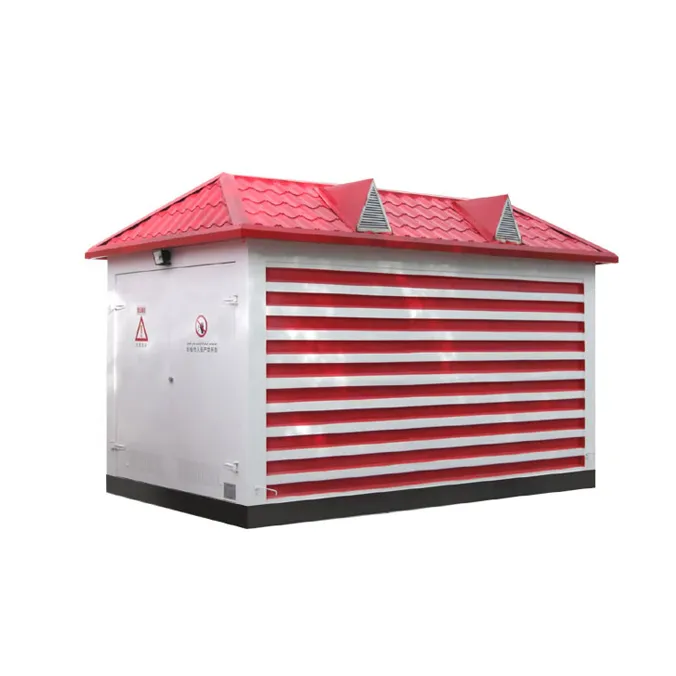

First off, let's talk about what a box type substation is. It's a compact, self - contained unit that houses all the equipment needed to step down high - voltage electricity to a lower voltage for use in industrial, commercial, or residential settings. Think of it as a mini - Switching Station that can be easily installed and moved around as needed.
Now, communication protocols are like the languages that different parts of the substation use to talk to each other and to external systems. They ensure that data can be transmitted accurately and efficiently, which is crucial for the proper operation and monitoring of the substation.
One of the most commonly used communication protocols in box type substations is Modbus. Modbus is a simple, easy - to - implement protocol that has been around for a long time. It's an open - source protocol, which means that anyone can use it without having to pay licensing fees. Modbus works by sending messages between devices, where each message contains a command or a data value. It's often used for basic monitoring and control tasks, like reading the voltage or current levels in the substation and controlling the operation of circuit breakers.
Another popular protocol is DNP3 (Distributed Network Protocol 3). DNP3 is a more advanced protocol that is designed specifically for use in power systems. It has a lot of features that make it well - suited for the complex requirements of a substation. For example, it can handle large amounts of data, support multiple levels of security, and provide real - time data transfer. DNP3 is often used for more sophisticated monitoring and control applications, such as remote control of the substation and integration with a utility's SCADA (Supervisory Control and Data Acquisition) system.
IEC 61850 is a relatively new protocol that is quickly gaining popularity in the power industry. It's a standards - based protocol that aims to provide a common language for all the devices in a substation. IEC 61850 uses object - oriented modeling to represent the various components of the substation, which makes it easier to understand and manage the system. It also supports high - speed data transfer and can be used for both protection and control functions. With IEC 61850, different vendors' devices can communicate with each other seamlessly, which is a big advantage in a substation environment where you might have equipment from multiple manufacturers.
Let's take a closer look at how these protocols are used in our 10KVA Box Type Substation. In a 10KVA substation, we might use Modbus for basic monitoring of the power distribution within the substation. For example, we can use Modbus to read the temperature of the transformers, the status of the switches, and the power consumption of different loads. This data can be sent to a local monitoring device or even to a remote server for further analysis.
DNP3 can be used for more advanced control functions. For instance, if there is a fault in the system, DNP3 can be used to send a signal to the circuit breakers to trip and isolate the faulty section. It can also be used to communicate with the utility's control center, so that they can get real - time information about the substation's status and take appropriate actions.
IEC 61850 can be integrated into the 10KVA substation to provide a more comprehensive and standardized communication solution. It can be used to connect all the devices in the substation, including the transformers, circuit breakers, and Power Distribution Box, into a single network. This allows for better coordination between different components and enables more advanced protection and control strategies.
When it comes to choosing the right communication protocol for a box type substation, there are several factors to consider. Cost is one of the important factors. Modbus is generally the most cost - effective option, as it doesn't require any special hardware or software licenses. DNP3 and IEC 61850 may require more investment in terms of hardware and software, but they offer more advanced features.
Compatibility is another key factor. You need to make sure that the protocol you choose is compatible with all the devices in the substation, as well as with any external systems that you want to connect to. For example, if you want to integrate your substation with a utility's SCADA system, you need to choose a protocol that is supported by the SCADA system.
Security is also a major concern. In today's digital age, protecting the substation from cyber - attacks is crucial. Protocols like DNP3 and IEC 61850 have built - in security features, such as authentication and encryption, to help safeguard the data and the operation of the substation.
As a box type substation supplier, we understand the importance of choosing the right communication protocol. That's why we work closely with our customers to determine the best solution for their specific needs. Whether you need a simple Modbus - based system for basic monitoring or a more advanced IEC 61850 - compliant system for full - scale integration, we've got you covered.
If you're in the market for a box type substation and want to learn more about the communication protocols or how they can be tailored to your requirements, don't hesitate to reach out. We're here to answer all your questions and help you make the right choice for your power distribution needs.
In conclusion, communication protocols play a vital role in the operation and management of box type substations. They enable seamless communication between different devices and systems, ensuring that the substation can operate safely and efficiently. By understanding the different protocols available and their features, you can make an informed decision when it comes to purchasing a box type substation. So, if you're interested in discussing your project or have any questions, just get in touch, and we'll be happy to assist you.
References
- "Modbus Protocol Specification", Modbus - IDA
- "DNP3 User's Manual", DNP3 Users Group
- "IEC 61850 Standard", International Electrotechnical Commission


